
5 Things That Look Wrong While Your Tattoo Heals (But Aren't)
Quick answer
Most things that look wrong in the first weeks are normal healing. A fresh tattoo weeps clear plasma for a day or two, can pool a dark ink sack under a healing film, stays a little red and swollen for the first few days, peels and itches from about day 4 to day 14, and then looks cloudy until the new skin settles. What isn't normal: redness that spreads or darkens instead of fading, pain that gets worse, pus, open sores, fever or chills. Those mean see a doctor.
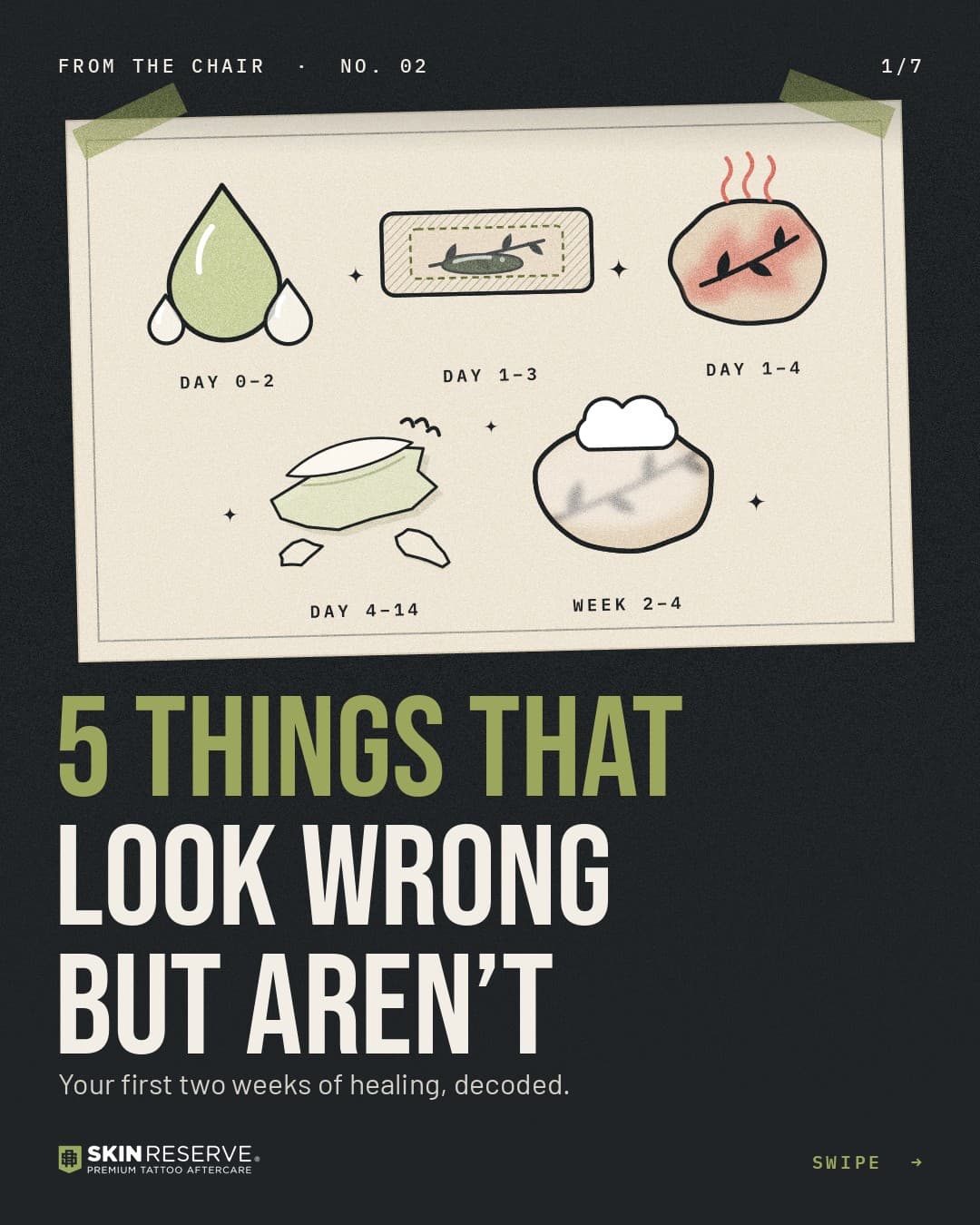
Healing a tattoo is a lot of staring at it. And in the first two weeks, almost everything you'll see looks like something has gone wrong: it leaks, it puffs up, it flakes, and then it goes dull right when you expected it to look finished.
Most of that is your skin doing exactly what it should. Here are the five stages that worry people most, in the order you'll meet them, with what each one looks like, why it happens and the sign that actually means trouble.
One rule before any of it: your artist's aftercare sheet comes first. If something looks off, send them a photo. They've seen thousands of healing tattoos, including their own work on your skin.
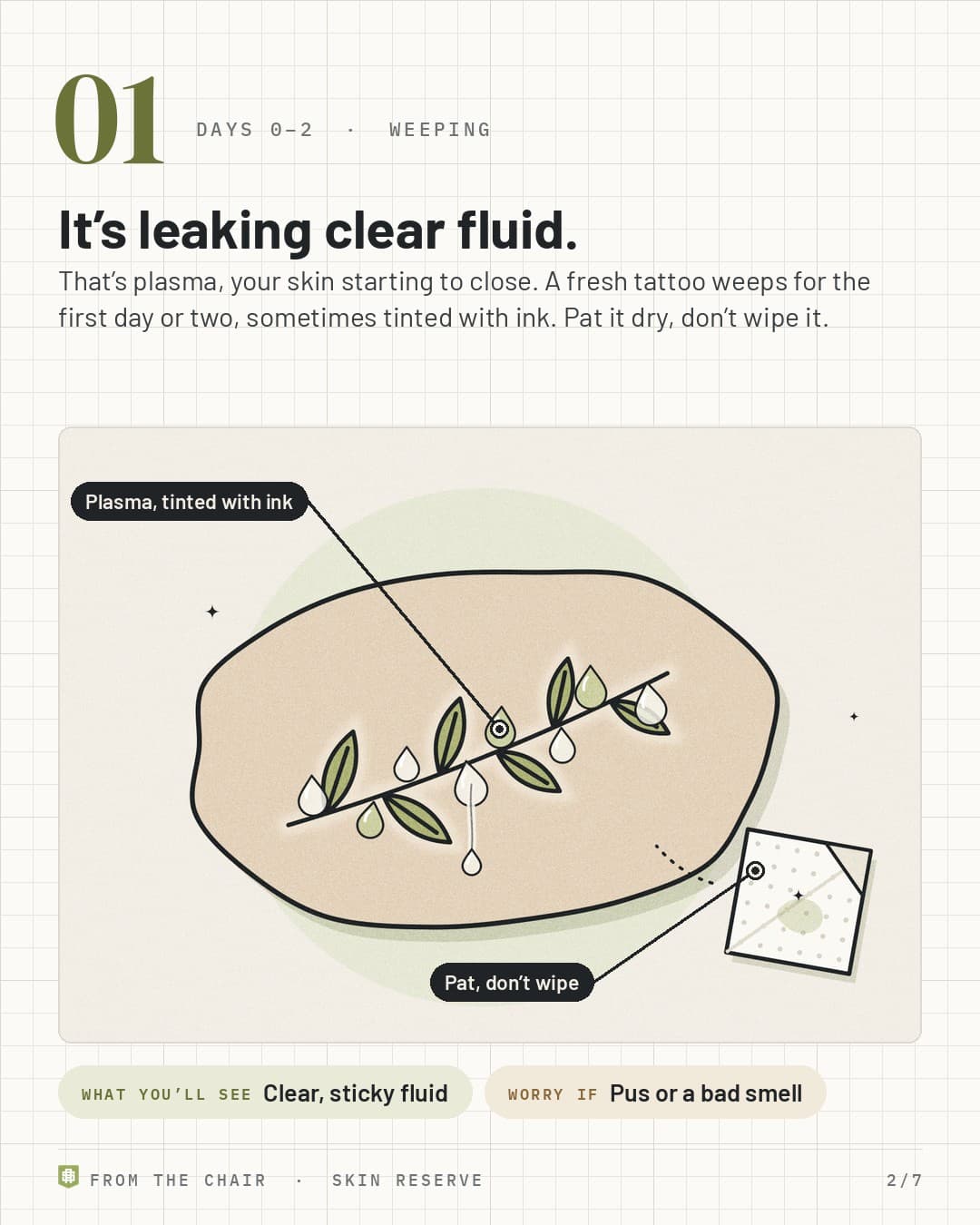
1. It's leaking clear fluid (days 0–2)
What you'll see: clear or slightly yellow, sticky fluid on the surface, sometimes tinted with ink. It can bead up, run, and dry tacky on the skin.
Why it happens: that fluid is plasma, part of your body's first response to a wound. A fresh tattoo weeps for roughly the first 24–48 hours2, and clear oozing is on the list of normal reactions1. Some ink comes up with it, which is why it can look colored.
What to do: if you're healing without a film, wash gently and pat dry with a clean paper towel. Don't wipe or rub, and don't let a thick crust build up.
Worry if: the fluid turns thick, cloudy and yellow-green (pus), smells bad, or keeps coming well past the first few days1.
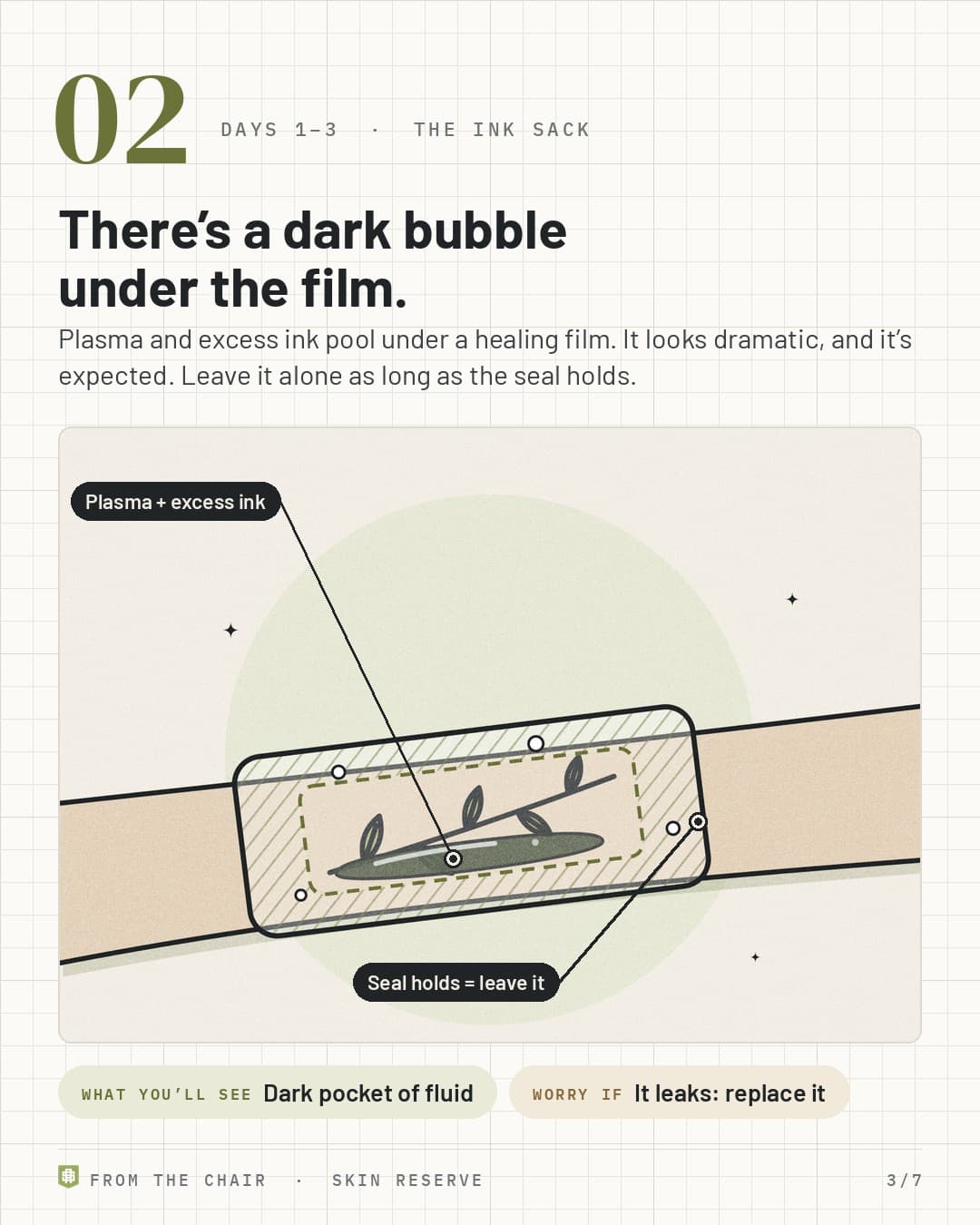
2. There's a dark bubble under the film (days 1–3)
What you'll see: if your artist put on a healing film like Skin Reserve, you may see a dark pocket of fluid pooled under it, usually at the lowest edge. People call it an ink sack.
Why it happens: it's the same plasma, plus excess ink, collecting under the film instead of drying on your skin. It looks dramatic, and it's expected2.
What to do: leave it alone as long as the seal holds. The film is doing its job. You can shower with it on.
Worry if: the seal breaks and fluid leaks out. That isn't a medical problem, but the film needs replacing: take it off under warm running water, peeling it back in the direction of hair growth, wash gently, pat dry and apply a fresh piece, or switch to the aftercare routine your artist gave you2.
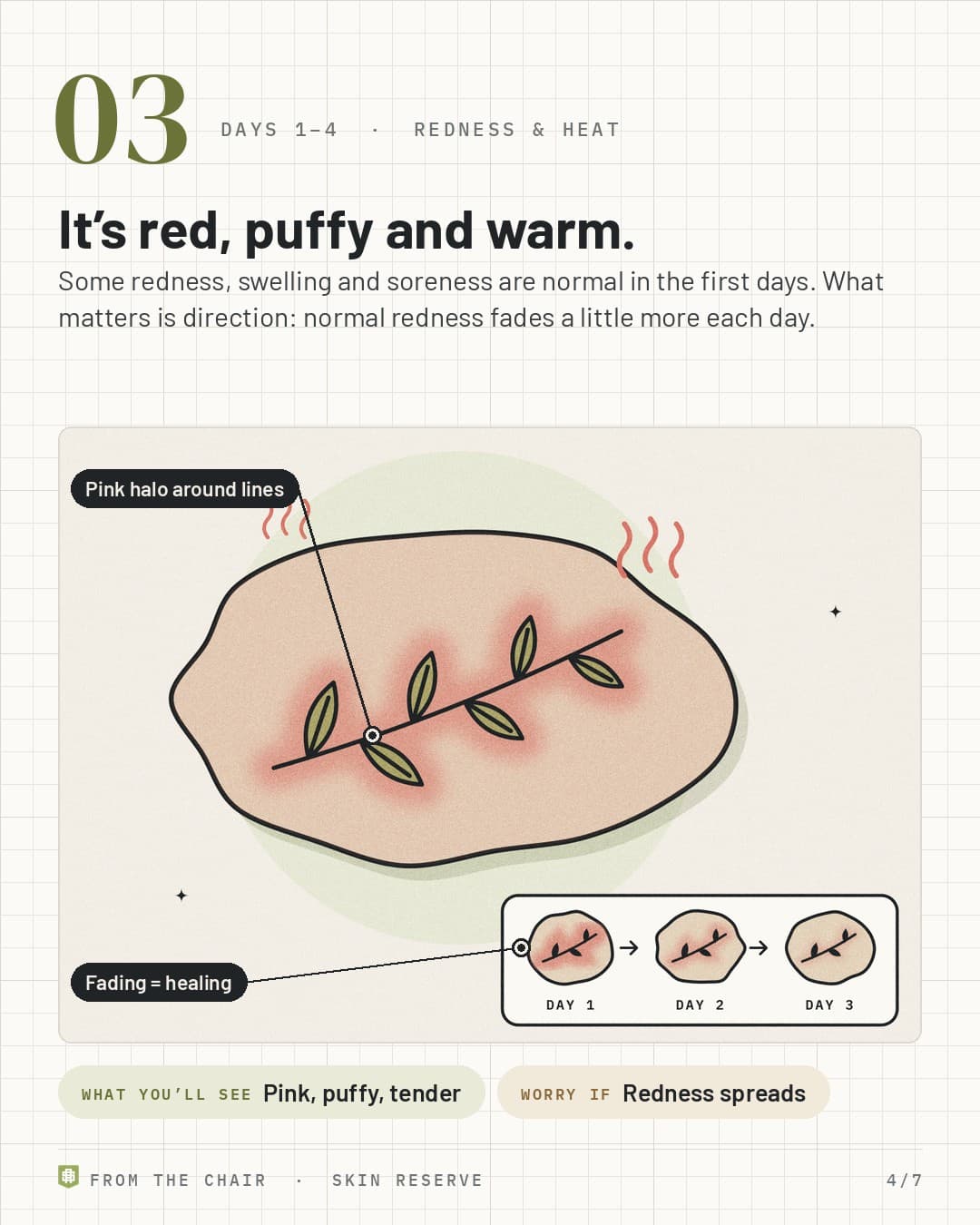
3. It's red, puffy and warm (days 1–4)
What you'll see: a pink halo around the lines, some swelling, tenderness and warmth to the touch. Dense or heavily worked areas can look angrier than the rest.
Why it happens: the needle made thousands of small wounds, and inflammation is how your body starts repairing them. Some redness, swelling and soreness are normal1, and they typically settle over about the first week3.
What to do: keep it clean, avoid tight clothing over it, and watch the direction it's moving.
Worry if: the redness gets darker or spreads outward instead of fading, or the pain keeps getting worse after the first couple of days. Those are signs of infection1.
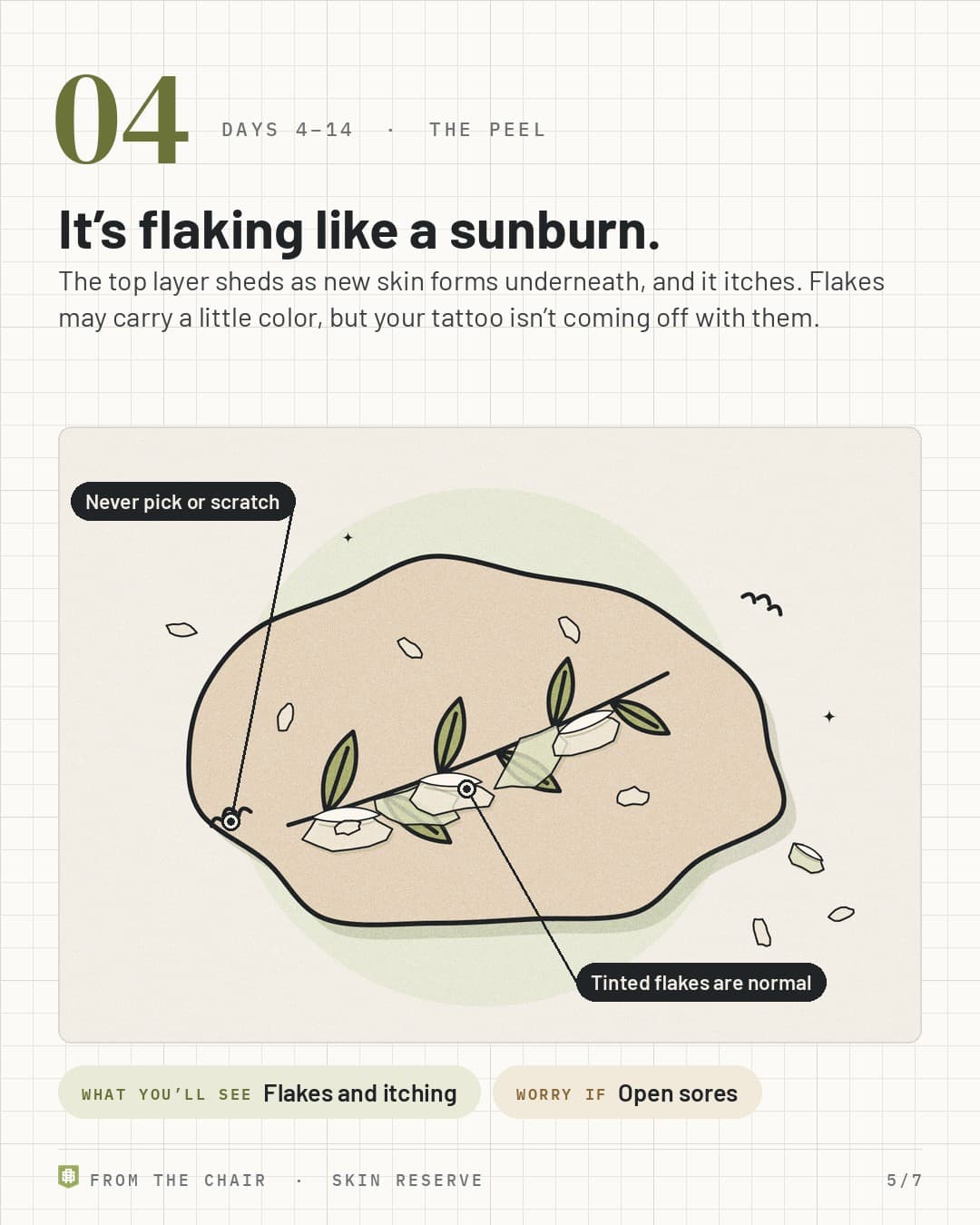
4. It's flaking like a sunburn (days 4–14)
What you'll see: the surface dries, peels in thin flakes and itches, sometimes a lot. Flakes can carry a little color from surface ink.
Why it happens: the top layer of damaged skin sheds as new skin forms underneath. Peeling usually runs from around day 4 to day 142. Colored flakes are something artists see all the time. They aren't your tattoo coming off: the ink that stays sits below the layer that sheds3.
What to do: let flakes fall off on their own. Don't pick, peel or scratch. A light tap or a thin layer of fragrance-free lotion helps with the itch.
Worry if: you see open sores, bleeding cracks, or a rash of itchy, red, painful bumps1.
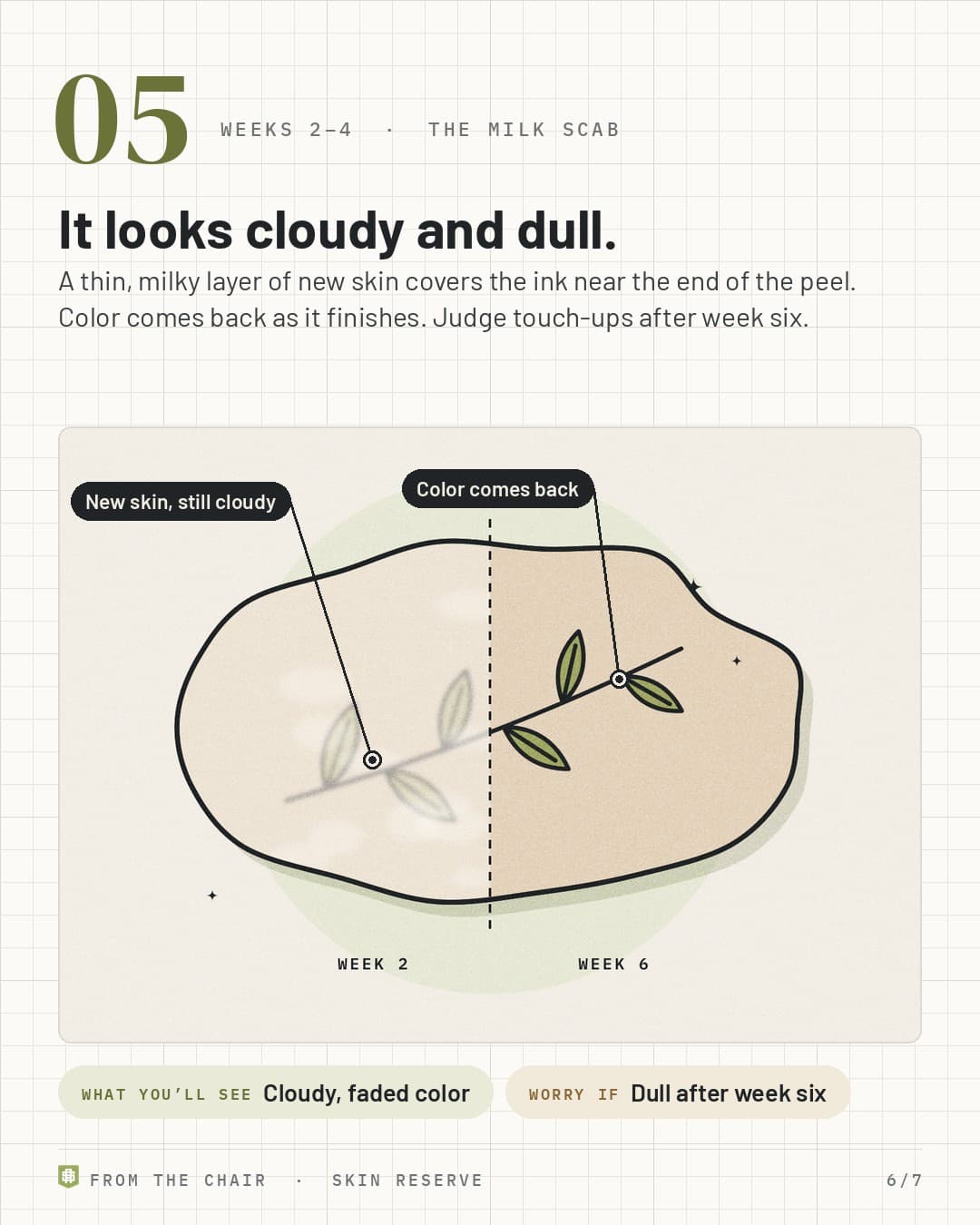
5. It looks cloudy and dull (weeks 2–4)
What you'll see: right when the peeling stops, the tattoo looks milky, faded or slightly shiny, like it's under wax paper. Artists call this the milk scab.
Why it happens: a thin layer of new skin now covers the ink, and it isn't fully settled yet. Color comes back as that skin finishes maturing2. A tattoo is usually healed on the surface in about two weeks and fully in about four2, though the deeper layers can take longer3.
What to do: keep moisturizing lightly, and keep it out of direct sun.
Worry if: it still looks patchy or faded after about six weeks. That's not a health issue, but it's the right time to judge whether you need a touch-up2.
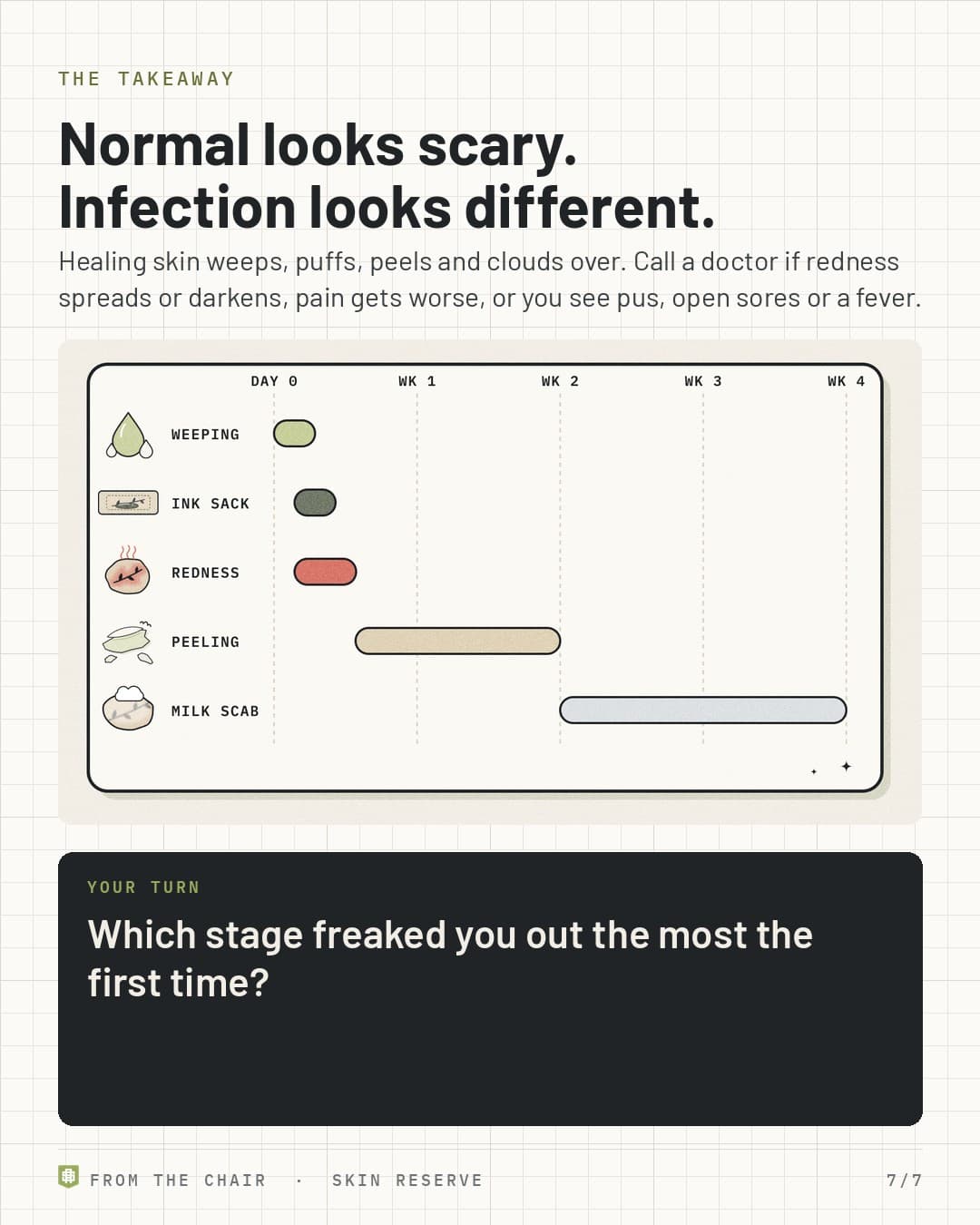
The healing timeline at a glance
| Stage | When | Normal | See a doctor if |
|---|---|---|---|
| Weeping | Days 0–2 | Clear, sticky fluid, sometimes ink-tinted | Pus, a bad smell, or oozing that doesn't stop |
| Ink sack | Days 1–3 | Dark fluid pooled under a sealed film | Not a medical issue: replace the film if it leaks |
| Redness | Days 1–4 | Pink, puffy, warm, fading day by day | Redness spreads or darkens, pain worsens |
| Peeling | Days 4–14 | Thin flakes and itching | Open sores, bleeding cracks, a painful rash |
| Milk scab | Weeks 2–4 | Cloudy, dull color that clears | Not a medical issue: judge touch-ups after week 6 |
Signs that aren't normal
Normal healing gets a little better each day. Infection goes the other way. The American Academy of Dermatology lists these signs of an infected tattoo1:
- Redness that darkens or spreads instead of fading
- Pain that continues or gets worse
- A rash of itchy, red, painful bumps
- Fever or chills
- Pus
- Open sores
If you notice any of them, see a doctor or a board-certified dermatologist right away1. Tell your artist too, so they know. An allergic reaction to the ink can also show up as an itchy, bumpy rash. See a dermatologist if one lasts more than a week or two1.
Why a film changes what you see
Healing under a breathable, waterproof film like Skin Reserve moves the first two stages under cover. The weeping collects under the film instead of drying on your skin, which is why you see an ink sack instead of a crust. You don't wash it twice a day for those first days. You can shower with it on. When the film comes off after 3–4 days, the peel and the milk scab play out the same way they would with any method.
FAQ
Is it normal for a new tattoo to ooze?
Yes. A fresh tattoo weeps clear or slightly yellow plasma, sometimes tinted with ink, for roughly the first 24–48 hours. Pat it dry with a clean paper towel rather than wiping. Thick, cloudy yellow-green fluid or a bad smell is not normal and can mean infection.
How long does redness last after a tattoo?
Some redness, swelling and tenderness are normal for the first few days and usually settle over about a week. It should fade a little each day. Redness that spreads, darkens or comes with worsening pain is a sign of infection, so see a doctor.
What is an ink sack under a tattoo film?
It's a pocket of plasma and excess ink that collects under a healing film like Skin Reserve, usually in the first 1–3 days. It looks dramatic but is expected. Leave it alone while the seal holds. If the film leaks, remove it, wash gently, pat dry and put on a fresh piece.
Why are my tattoo flakes colored?
Peeling skin can carry a little surface ink, so flakes sometimes look tinted. That's normal and it doesn't mean your tattoo is coming off. The ink that stays sits below the layer that sheds. Let flakes fall off on their own and don't pick them.
What is a milk scab on a tattoo?
It's the cloudy, dull look a tattoo has after it finishes peeling, usually around weeks 2–4. A thin layer of new skin covers the ink, and the color comes back as that skin matures. Wait until about week six before judging whether you need a touch-up.
How do I know if my tattoo is infected?
Watch the direction. Normal healing improves each day. Signs of infection include redness that darkens or spreads, pain that keeps getting worse, pus, open sores, a rash of painful bumps, fever or chills. If you see any of these, see a doctor or board-certified dermatologist right away.